
Talk and Silence

TALK & SILENCE

Many victim-survivors of violence and abuse are silent or are silenced.

Silence Tile

SILENCE

"Less than 40 per cent of the women who experience violence seek help of any sort.”

 [UN Women]

Talk Tile

TALK

"In the majority of countries with available data on this issue, among women who do seek help, most look to family and friends and very few look to formal institutions, such as police and health services. Fewer than 10 per cent of those seeking help reported to the police.”

 [UN Women]

Silenced Tile

SILENCED

Many victim-survivors are silenced by the violence and abuse used against them and by unhelpful and harmful responses in society, services and systems.

We invite you to read the reflection booklet 'Talk', to explore the 'Talk and Silence' insights and to read the reflection booklet 'Fear'.

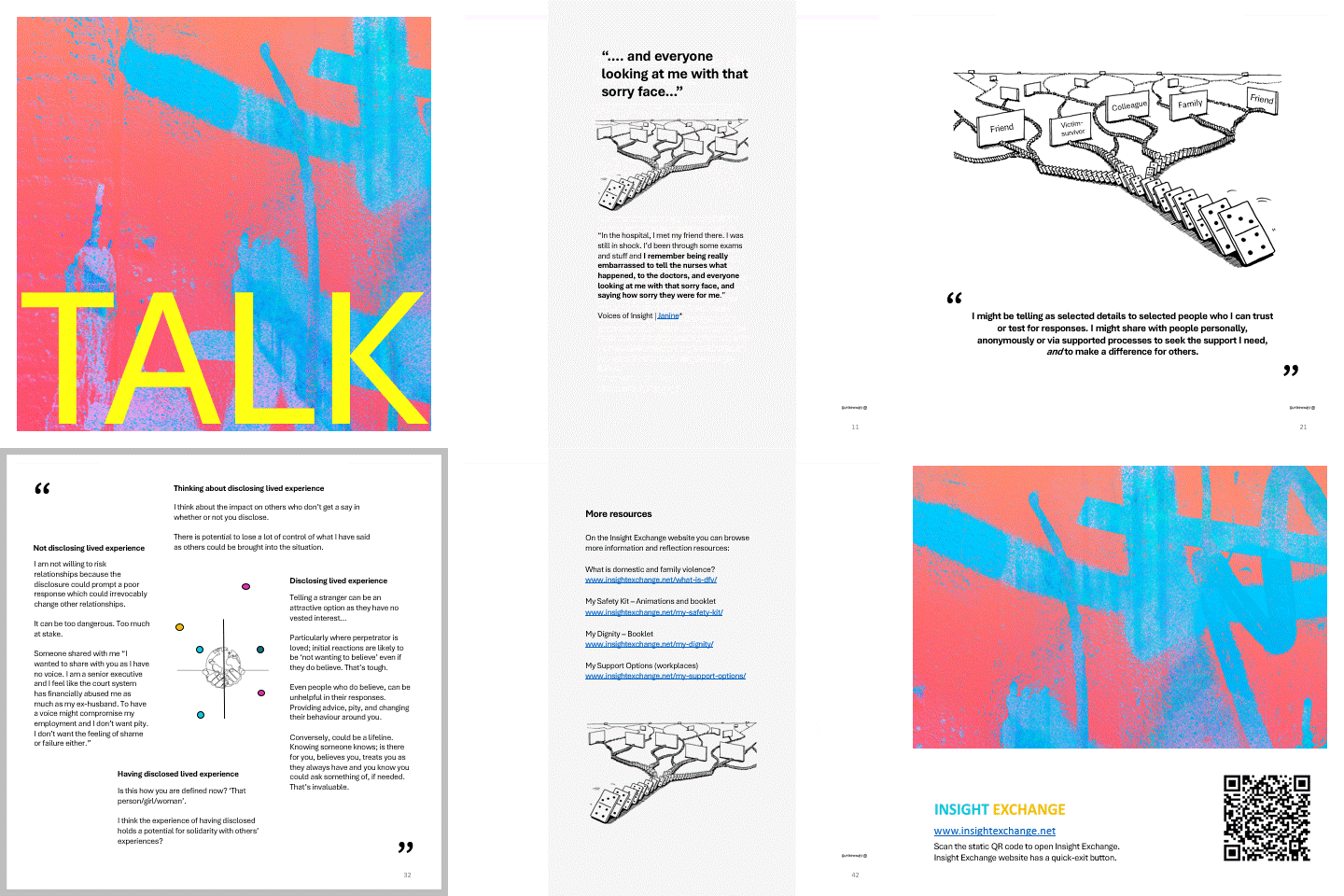
We invite you to read 'Talk' - a reflection resource designed to reveal and value the strategic considerations of victim-survivors when deciding if, when and how to tell someone about experiences of violence and abuse.

"Responses don’t ‘start’ when someone ‘tells’ us something.  We have been responding all along (directly or indirectly) through our stance, our silence, our action or inaction about violence and abuse. We are responders even when nothing is told to us." [Talk]
03 Language Lab TS

We invite you to explore the intentional ways in which language and silences are used and mis-used to build on or undermine safety, dignity and justice.

This link opens the 'Talk and Silences' lightbox in full screen. (This lightbox includes embedded animation 'Our Responses').

We invite you to read the booklet Fear. As responders we can better understand victim-survivors many reasons to fear, when we explore what victim-survivors are having to do, not do, give up and go without to be able to survive and lead their lives.

"‘Fear’ is typically understood to be a key measure of the likely harm the perpetrator will cause. Yet, the absence of ‘obvious’ fear, is wrongly and uncritically assumed to mean the absence of threat and risk of harm. Understanding and valuing victim-survivors’ lived expertise and their specific reasons to fearinforms and improves the quality of our responses." [Fear]

Talk and Silence: Open the 'Talk and Silences' lightbox in full screen by clicking on the first tile in the lightbox below - the pages will show in full screen.

We invite you to explore 'Quiet Questions. Silenced Thoughts' This booklet is not for everyone but may be really important to someone.